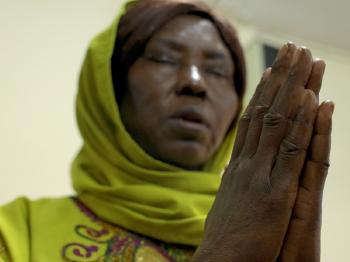
Part One in this series explored the nature of persecution, why it occurs, and how Scripture frames it, while Part Two examined its theological roots and the ways believers endure suffering. In this third and final part, we will explore how God uses suffering for His glory and the good of His people. Specifically, we will explore how God uses the suffering of persecution to drive our witness, lead us to transformation, and accomplish all His good purposes in and through His people.
In Ghana, faithful endurance in suffering becomes a living testimony, where amid hardship, the Church bears witness that hope is not fragile but anchored in Christ
Persecution as God’s plan to expand the Gospel
The well-known promise of Romans 8:28 assures believers that nothing happens outside the glorious and grand design of God and that even our suffering serves His good and righteous purposes. We cannot fathom all the specific realities of this “good”, we are not required to figure it all out, but Scripture does provide us with some clear indications of the “good” which God accomplishes through persecution.
Persecution, though deeply painful and always unjust, is not a threat to God’s plan to build the Church of Christ (Mathew 16:18).
Within the Biblical narrative, opposition to God’s people is frequently transformed into a powerful arena for divine activity. Rather than silencing the Church, or driving her to crippling despair, persecution often becomes the context through which God’s purposes advance, the faith of believers is refined, and the Gospel is made visible in compelling ways.
“Nothing happens outside the glorious and grand design of God.”
Scripture repeatedly demonstrates that God purposes to advance the Gospel witness of His people, produce greater spiritual maturity in them, and even enable personal and societal transformation through the suffering of His followers.
The Gospel spreads under persecution
One of the most striking patterns in the New Testament is that persecution often becomes the catalyst for the expansion of the Gospel.
This is specifically highlighted as the book of Acts records the history of the early Church. The first believers experienced this reality soon after the formation of the church in Jerusalem. Following the martyrdom of Stephen (Acts 7:54-60), a wave of persecution forced many believers to scatter beyond the city. Yet this dispersion did not suppress the Christian movement; instead, by God’s design it became the very means through which the Gospel spread into new regions. The book of Acts records that “ those who had been scattered preached the word wherever they went” (Acts 8:4).
What appeared from human perspective to be a crisis, became, in God’s providence, a significant moment of missionary expansion. That speaks of a grander plan controlled by the divine hand which overrules the evil intentions of persecutors.
Caption: Suffering intended to weaken the Church is repeatedly turned into a means by which God strengthens His people and advances His mission
This development fulfilled the very pattern that Jesus had outlined before His ascension. In Acts 1:8, Christ declares that His followers will be His witnesses in Jerusalem, in all Judea and Samaria, and to the ends of the earth. The persecution that drove believers out of Jerusalem inadvertently propelled the Church into the wider world. In this way, opposition became the vehicle through which the mission of God advanced.
The Church learned that the advancement of the Gospel does not ultimately depend on favourable circumstances but on the sovereign work of God, who despite opposition fulfils His good promises. As Joseph pronounced thousands of years earlier, God ordains even the events that people intend for evil and works things for good (Genesis 50:20; see also Acts 2:23).
The Church flourishes in her God-given mission
The life of the apostle Paul offers another powerful illustration of this paradox: that which seems detrimental to the Church causes her to flourish in her God-given mission.
Much of Paul’s ministry unfolded within contexts of hardship, imprisonment and opposition. Yet Paul repeatedly declared that these unfavourable circumstances served to advance the Gospel. Writing from prison, he tells the Philippian church (1:12-14), for example, that his imprisonment had resulted in the progress of the Gospel because the whole imperial guard had come to know that he was in chains for Christ. Furthermore, his suffering emboldened other believers to proclaim the Word of God with greater courage. What seemed to limit Paul’s ministry, became, in God’s providence, a new platform for witness to the Gospel.
From the above examples, a significant theological reality is exposed: the mission of God cannot ultimately be obstructed by human hostility.
Read more: Why are Christians persecuted? A missiological and ecclesiological reflection
The missio Dei (the mission of God) unfolds according to God’s purposes, even under circumstances where the Church faces opposition. It is noticeable that throughout history the Gospel has often spread most rapidly in places where Christians have endured the most intense suffering for their faith – for example, during the early Christian persecutions in the Roman Empire, when despite severe oppression, the Christian message expanded rapidly across the empire, and more recently in China, where despite periods of state restriction and persecution, the Church has grown significantly in both size and influence.
The Church father Tertullian famously said, “The blood of the martyrs is the seed of the Church.” This paradox reflects the deeper logic of the cross, where apparent defeat becomes the means of divine victory (1 Corinthians 1:18; Philippians 2:6-8; John 12:31-32).
Persecution as God’s context for Gospel witness
Faithful endurance of believers, especially in hostile environments, is often a visible testimony to their hope in Christ.
When Christians, by the grace of God, continue to demonstrate peace, integrity and love in the midst of suffering, their lives bear witness to a deeper source of strength. The apostle Peter encourages believers to live in such a way that those who accuse them may observe their good deeds and ultimately glorify God (1 Peter 2:12).
The credibility of the Christian message is thus reinforced by the character and perseverance of those who live it while they face hardship and threats of various kinds.
God uses suffering to conform believers in South-East Asia to Christ, producing endurance, hope and deeper dependence on Him
History is filled with examples of how the courage of persecuted Christians has been used by God to magnify the transforming power of the Gospel. When believers follow the example of their Master and respond to hostility with grace rather than retaliation, they reflect the character of Christ (cf. 1 Peter 2:21-22). This response challenges the normal tendencies of human behaviour, which often revolve around revenge and self-preservation.
Instead, the Church embodies a radically different ethic rooted in the transforming power of the love of God. Such ability is evidence of the believer’s hope beyond this world which has been secured by the Gospel promises of God (Romans 8:18). In their suffering, they find opportunities to testify to the hope that is within them (1 Peter 3:15).
Persecution as a means of transformation
According to Romans 8:28-30, God’s good purposes in the midst of suffering are to transform His people into the image of Christ.
Pastor and author Dr Paul Tripp summarises this remarkable work when he states, “God will take you, where you do not want to go, in order to produce in you, that which you cannot accomplish on your own.” In this way, persecution serves as a means through which God refines and deepens the faith of His people.
The New Testament repeatedly presents suffering as a context for spiritual transformation. James encourages believers to “consider it pure joy” when they face trials because the testing of faith produces perseverance and maturity (James 1:2-4). Similarly, the apostle Paul explains that suffering produces perseverance, character and hope because God’s love has been poured into believers’ hearts through the Holy Spirit (Romans 5:3-5).
Read more: Imitating the Crucified: The Church’s response to persecution
These passages do not suggest that suffering is inherently good or desirable. Rather, they affirm that by the divine will of God, He uses even painful circumstances to shape the character of His people.
In contexts of persecution, and suffering in general, believers often develop a deeper reliance on God and a clearer understanding of the cost of discipleship, freeing them from the futile comforts of this world, to wait eagerly for the fulfilment of God’s promises. Barnabas Aid has often witnessed how persecuted Christians in some of the most hostile environments demonstrate remarkable maturity as a result of their faith being tested through adversity.
Persecution highlights the true nature of discipleship
Persecution can also purify and clarify the identity of the Church as a wider body.
In contexts where Christianity enjoys cultural privilege, the danger exists for it to become intertwined with social norms or political influence. However, when and where believers face opposition, the true nature of discipleship becomes more visible. Jesus taught that anyone who wishes to follow Him must deny themselves, take up their cross, and follow Him (Mark 8:34).
This does not mean Christians welcome or look for trouble to prove their devotion to Christ, but it does mean that when God allows trouble under His sovereign rule, Christians seek to remain faithful to Christ (Mark 8:38). When it becomes uncomfortable, even dangerous to be a Christian, the Church is purified and shows her commitment not to be conformed to this world (Rom 12:2).
A brother in Bangladesh, where persecution, though costly and painful, becomes part of the Church’s witness. In suffering, faith is strengthened, discipleship is deepened and God’s mission continues to advance
Furthermore, persecution often reveals the power of forgiveness and reconciliation, something which is only truly possible for Gospel-transformed people who themselves realise how much they have been forgiven (Luke 7:47). Jesus commands His followers to love their enemies and pray for those who persecute them (Matthew 5:44). Paul echoes the same teaching (Romans 12:14). This stands in sharp contrast to the instinctive human response to injustice.
When believers choose forgiveness rather than revenge, they reflect the very heart of the Gospel which transforms them.
“Persecution and suffering is used by God to put the power of the Gospel on display.”
A striking contemporary example of transformation through persecution can be seen in the response of Nahla Faheem following the 2016 Cairo church bombing. In December 2016, a suicide bombing targeted the Church of St Peter and St Paul (Botroseya Church) in Cairo, killing 25 worshippers, including Nahla’s two daughters, Mareena (21) and Febrania (18).
In the aftermath of this devastating loss, Nahla publicly chose the path of forgiveness toward those responsible for the attack. Reflecting on her journey a year later, she spoke of how her faith had led her to a place of deep peace. Her response illustrates how persecution and suffering can be used by God to put the power of the Gospel on display.
Conclusion: God’s good triumphs over humanity’s evil
The ultimate example of how God’s good triumphs over man’s evil remains the life and death of Jesus Christ.
The crucifixion is the most unjust act of persecution in human history, where the guiltless One is condemned to death. Yet through this act of violence, God accomplished the redemption of the world. The Apostle Peter makes a remarkable statement in saying that Jesus was handed over according to God’s “deliberate plan and foreknowledge”, and through His death and resurrection God overcame the power of sin and death (Acts 2:23-24).
This is a message the earliest Christians needed to hear, and needs to be echoed throughout the Church age, for it would be vitally important to remember that as persecution at the hands of evil men continues, God is always using it for good Gospel purposes.
A church building in Nepal. The cross reminds us that what humanity purposes for evil, God purposes for good – for His glory and the good of His people [Image credit: Ramesh Thapa Magar/Wikipedia]
In the final analysis, we can be sure, persecution cannot silence the Church; rather, it often becomes the context through which God’s purposes are most powerfully realised. Through suffering, the Gospel advances, the faith of believers is refined, and the transforming power of Christ becomes visible to the world. When the Church responds with faith, courage and love, she bears witness to the reality of God’s kingdom and the hope of redemption.
In this way, persecution, though painful, can become a powerful instrument through which God accomplishes His redemptive work in the world.
A final note on persecution and faith
At the end of this three-part series, we conclude that persecution is woven into the identity of the Church, reflecting both Christ’s own suffering and the Church’s participation in God’s mission in the world.
As challenging as it is, it is far from being a mere social or political inconvenience; rather, it reveals the Church’s commitment to true discipleship, refines the believer’s faith, strengthens communal bonds, and provides opportunities for witness and mission.
The early Church’s experience, from Stephen’s martyrdom to Paul’s imprisonment, demonstrates how suffering can propel the Gospel in God’s good design, while many more contemporary examples show that faithful endurance, forgiveness and service make Christ visible especially amid hostility.
For the global Church, the reality of persecution should move believers everywhere to prayerful intercession, intentional practical support, and the Biblical perspective that suffering, though costly and painful, is never to be interpreted as defeat; it is God’s glorious plan to allow His people to participate in His redemptive work and to reveal the transformative power of the Gospel.
“God’s sovereignty in affliction is a sweet support to the soul; He is the master of all events, and though His rod may wound, it never strikes beyond what He ordains, nor fails to serve His ultimate design of our good.”
John Flavel