Christians in Bangladesh are among the minority groups that have raised concerns about a rise in extremism ahead of Bangladesh’s elections, scheduled for 12 February.
Believers say that intimidation, targeted attacks and social boycotts have surged since the ousting of former Prime Minister Sheikh Hasina in August 2024.
Bangladesh is a vibrant and densely populated South Asian nation with a rich cultural heritage and a Muslim-majority population. Despite significant economic progress in recent years, ongoing political tensions and social challenges continue to raise concerns regarding the safety of religious minority communities.
Christians and other minorities are especially vulnerable in rural areas
These underlying tensions are becoming particularly pronounced as Bangladesh approaches its national election; religious minority communities are reporting deepening fear and uncertainty.
In the past 18 months minorities, including Christians and Hindus, have faced sporadic attacks, killings and property destruction. Many of these incidents have reignited memories of past electoral violence, leaving communities anxious about their safety.
“We are living in constant fear,” a Christian schoolteacher in Dhaka, speaking anonymously, said. “Churches are being watched, warnings appear on walls, and families are afraid to move freely. It feels like we have been left to protect ourselves.”
Harassment and intimidation
In late 2025, two churches and a Christian school were attacked with makeshift bombs. While no one was injured, the blasts caused panic. Police described the incidents as attempts to intimidate the community, though no group claimed responsibility.
Rural areas are especially exposed. In Tetulia village, Satkhira district, Christian families protested repeated assaults by local mobs. “About 50 people came with sticks and sharp weapons,” resident Sabuj Goldar said. “We are citizens of this country. Why shouldn’t we get justice?”
The Christian community in Bangladesh numbers around 500,000 people and represents less than one per cent of the population.
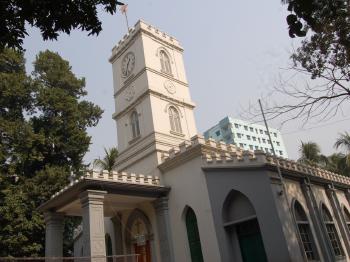
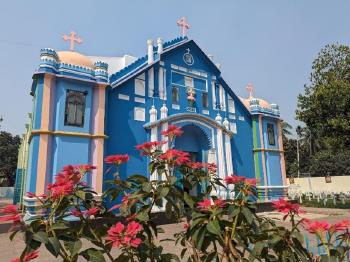
Tejgaon Church in Dhaka was one of those attacked in late October 2025 [Image credit: Gaudium Press]
Pastors report that converts from Islam or tribal communities face the greatest risks, citing looted homes, burned churches, and pressure on families to renounce their faith.
“For now, we live quietly and cautiously,” a pastor from northern Bangladesh said. “But faith should not mean fear. We only want to live with dignity and equal protection under the law.”
While the interim government, led by Muhammad Yunus, has claimed much of the violence is politically motivated, minority groups disagree. Hindu organisations have documented thousands of attacks since August 2024, highlighting a broader trend of threats to religious minorities.
Sukumar Pramanik, a Hindu teacher from Rajshahi, about 155 miles from Dhaka, recounted how a mob from his village attacked him and others in Bidyadharpur, breaking his hand and leaving him hospitalised. “I stood in front of the mob believing they knew me and would not attack me,” he said. “They broke my hand – but more than that, they broke my heart and my trust.”
Such personal experiences reflect the broader insecurity felt by minorities across the country.
Islamist-led coalition contesting election
Along with community tensions, minorities are keenly aware that power could be gained by a ten-party coalition headed by the Islamist political party Jamaat-e-Islami.
Jamaat-e-Islami was previously banned under the government of Hasina. They and at least four other parties in the coalition are keen to incorporate Islamic principles into the government of Bangladesh.
“As an Islamic organisation,” said Said Uddin Ahmed Khandaker, a candidate from one of these parties, the Khelafat Majlis, “our goal is a gradual transition towards a sharia [Islamic law]-based system.”
Shafiqur Rahman is the leader of Jamaat-e-Islami, an Islamist political party that was banned from 2013 until mid-2025 [Image credit: Press Information Department of Bangladesh]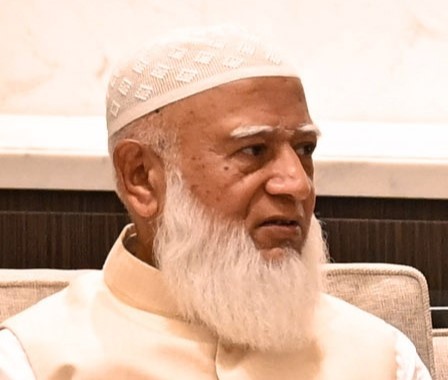
“Such a transformation cannot be imposed,” he continued. “Any fundamental change must come through collective public consent and mass participation.”
This represents a moderated version of the vision set out in May 2025 by the Joint-Secretary General of Hefazat-e-Islam, an Islamist pressure group, who said he was confident of being able to implement sharia after the election.
“Everything will be guided by the Quran,” said Mamunul Haque. “We demand death sentences for speaking against Allah, tarnishing the image of the Prophet, and offending Muslims,” Haque said. “There is no room for negotiation in this regard.”
As Bangladesh prepares to vote, minority communities face the difficult choice of participating in the democratic process while fearing renewed unrest. The upcoming election will be not only a test of political change but also of whether the rights and safety of vulnerable communities are genuinely protected.
 How you can pray
Pray for protection, safety and peace for religious minorities in Bangladesh, especially during the election period when tensions and violence often increase. Ask God to strengthen believers who are living in fear and uncertainty, and that they will experience courage, hope and unity within their communities. Pray for wisdom, integrity and restraint among political leaders, security forces and local authorities, that they will uphold justice and protect all citizens regardless of their faith. Pray for an end to communal violence and for lasting peace, stability and reconciliation across Bangladesh.