As many as 143 Christians have been slaughtered in less than two weeks as a new wave of Islamist violence has struck north-eastern Democratic Republic of the Congo (DRC).
In the worst single incident on 6 November, Islamic State (IS – also known as ISIS, ISIL, Daesh) media sources claimed the killing of at least 60 in Cantine-Aloya, North Kivu Province.
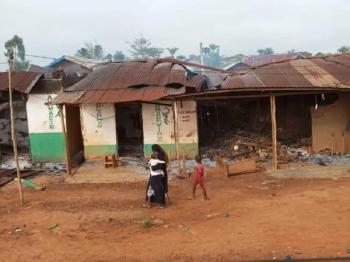
The militants also burned down dozens of homes as well as vehicles in the area.
Fighters from Islamic State Central Africa Province killed up to 60 Christians in Cantine-Aloya, North Kivu Province, D. R. Congo on 6 November
According to the IS report, this massacre was part of “a new series of attacks that have claimed the lives of dozens of Christians and displaced thousands, after they rejected the fair offer presented to them by the Islamic State, based on the tolerant rulings of Islam”.
This “fair offer” is likely to have been a demand to either convert to Islam or accept dhimmi status as a conquered, supposedly protected, people.
In classical Islam, as well as in IS ideology, those who accept dhimmi status are subject to various humiliating rules and regulations, including regular payment of the jizya tax to their conquerors.
A grim milestone: More than 1,500 Christians killed in less than two years
The massacre in Cantine-Aloya was just one of several attacks carried out against Christan communities by fighters from Islamic State Central Africa Province (ISCAP) since late October.
The current wave of violence began with a pair of raids on 26 and 27 October in Mbutoha, Ituri Province, in which six Christians were captured and beheaded.
More than 1,500 Christians have been killed by Islamic State Central Africa Province in the past two years. Almost of of these fatalities have occurred in the provinces of North Kivu and Ituri
Among the worst atrocities was the killing of 15 people and the burning down of 20 homes in Maputu, Ituri, on 2 November, and the massacre of 21 in the village of Mabiolo, Lubero Region, North Kivu on Sunday 8 November.
ISCAP – also known by its former name of ADF – has now killed around 1,530 Christians in targeted attacks since an escalation in violence across north-eastern DRC in December 2024.
According to counter-terrorism experts, ISCAP is waging “a war of religion [and] they will enforce sharia law wherever they rule”.
Violent persecution in D. R. Congo hampers Ebola response
Among the targets in ISCAP’s assault on Cantine-Aloya was a health centre treating patients infected with Ebola virus. Several patients infected with Ebola fled.
“High-risk contacts and other individuals under monitoring have all fled,” said Christian Kakule, a medical director in the region. “Our concern is that when probable cases end up out in the open like this, they can become a source of transmission and trigger an outbreak of the disease.”
Read more: “God has not abandoned us,” say persecuted D. R. Congo Christians
Disruption and instability caused by ISCAP and other armed groups has continued to hamper efforts to respond to the Ebola virus since this latest outbreak was confirmed.
The outbreak has claimed the lives of around 5,300 people, with the provinces of Ituri and North Kivu the worst affected.
ISCAP is just one of the armed groups operating in north-eastern DRC. Among them is the M23 Movement, which has also claimed the lives of thousands of civilians.

How you can pray
Ask the Lord to bring an end to the violent persecution being carried out in north-east D. R. Congo. Pray that He will strengthen Christians as they endure efforts to force them to abandon their faith. Pray also for the success of efforts to respond to the Ebola epidemic. Praise Him that He is a place of refuge and strength (Psalm 46:1).