Christians in Iran and across the Middle East have called for prayer as the conflict that began at the end of February continues.
Believers in Iran are cautiously optimistic that the country may move to a place where there is greater freedom for them to live out their faith, worship without fear, and share the Gospel with their neighbours.
Yet there is also concern that if the current uncertainty leads to long-term chaos and instability, extremist elements supportive of the Islamic Republic may end up in a position to make life even more difficult for Christians than it was before.
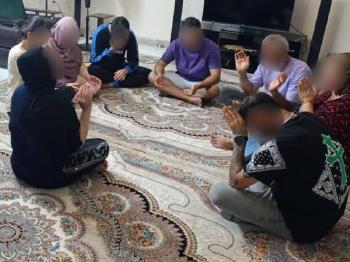
A “house church” meeting in Iran
The Christians of Iran lived for decades under intense pressure under the government of Ayatollah Ali Khamenei, who was killed in airstrikes on 28 February.
Believers face legal restrictions, close surveillance, arrests and the constant weight of uncertainty.
This is especially the case for converts from Islam, even more so than members of historic Christian communities. Farsi (Persian)-speaking Christians are converts from Islam, treated with hostility as apostates from Islam and criminalised as supposed threats to national security. Worship in Farsi has long been forbidden, and converts must meet in underground “house churches” or in other secretive ways in order to avoid detection.
Many of our brothers and sisters are still in prison. In the opening days of the conflict Barnabas Aid contacts in the Middle East have joined various human rights organisations in raising the alarm on behalf of prisoners being held at Evin Prison in the Iranian capital Tehran.
Believers affected across the region
“The situation here is critical,” said Pastor “Azad”, a Barnabas Aid contact in Erbil, Iraqi Kurdistan. “Daily life is filled with tension as we find ourselves caught in the middle of escalating conflict.”
Pastor Azad and his family hold citizenship in a Western country, but so far have chosen to stay with the church in Erbil. The risks are real – as many as 13 civilians were wounded in a drone attack in Erbil on 15 March.
“We are experiencing the profound blessing of staying,” he continued. “God is clearly leading our church to step into this heavy season with Kingdom values – reaching out to the lost, the broken, and the needy to strengthen their faith and offer hope.
“It is an incredibly heavy burden to balance my calling to shepherd this church with my natural desire as a father to keep my wife and kids safe.”
A strike in Tehran, Iran, in the opening days of the conflict [Image credit: Avash Media/Wikipedia]
Many Christians in Iraqi Kurdistan are refugees, having been displaced from the Nineveh Valley and other regions of Iraq a decade ago by Islamic State (IS, ISIS, ISIL, Daesh).
“Please pray for us,” requested Pastor Azad. “Pray for absolute clarity and wisdom as I navigate this tension between my family and our church.
“Thank you, Barnabas Aid, for standing with us.”
Pastor Azad’s experience is similar to that of believers elsewhere in the Middle East. “Movement constraints and safety concerns have made it difficult for many to maintain livelihoods or reach places of learning and worship,” said a church leader in the West Bank.
“This is a sad situation,” he continued, “especially as we are coming up to Easter.”
Lebanese Christians struggling to stay resilient
“We say that we are resilient. But I think this is too much now. … We don't want to be resilient anymore.”
These were the words of a Barnabas Aid project partner in Lebanon, reflecting on many years of conflict and economic hardship. The situation of Lebanese believers has now worsened once again, with thousands from Christian communities in the south displaced for the second time in less than 18 months.
Amid the uncertainty, communities are striving to support one another with compassion. Churches and local groups are welcoming those in need, adjusting their responses as humanitarian demands grow.
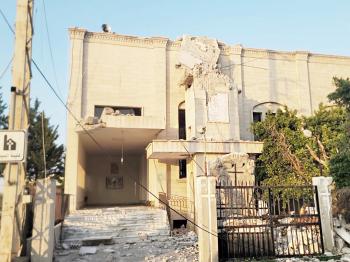
A church building in Bethlehem. Christians in the West Bank are among those facing “a sad situation” according to a church leader in the area
“For many believers, faith remains a sustaining source of strength,” said a Barnabas Aid contact. “Even in hardship, there is a conscious effort to give thanks for signs of grace and provision.”
Despite the risks, many Christians in the south have refused to evacuate, fearing that homes, lands and church buildings that have belonged to their communities for generations may be lost. Strikes on bridges over the Litani River that connect the south to the rest of the country have led to concerns that these believers may be cut off from supplies of food and fuel.
Among the casualties of Israeli airstrikes against the Islamist terrorist group Hezbollah was a church leader in the town of Qlayaa.
“Prayers for peace, protection and perseverance have become especially urgent,” said a Barnabas Aid researcher. “Ask that churches may remain places of hope, and that the light of Christ’s victory over death may be experienced not only as a future promise, but as a present source of strength.”
 How you can pray
Please continue to hold in prayer all those affected by displacement, insecurity and loss, especially our brothers and sisters in Christ. Pray for protection, for wisdom among leaders and responders, and for renewed endurance for families striving to maintain daily responsibilities under strain. May peace be restored swiftly, and may those living through these difficult days find comfort, courage and steadfast hope.