The Middle East has entered a deeply volatile and painful phase, with the conflict that began on 28 February touching almost every country in the region. Countless lives and communities are affected. Amidst this turmoil, the Church in the Middle East continues to witness of Christ, offering hope, care and faithful presence to the displaced and traumatised across the region.
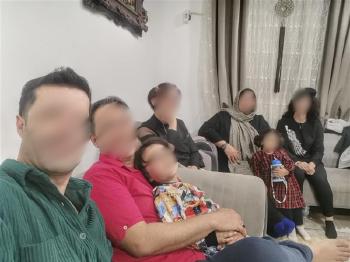
An underground “house church” in Iran [Image credit: Transform Iran]
What has happened in Iran?
On Saturday 28 February the United States and Israel launched widespread strikes targeting Iran’s missile infrastructure, military sites and senior leaders.
Among those killed was Iran’s Supreme Leader, Ayatollah Ali Khamenei, who had led the country since 1989. He was killed when his compound in Tehran was flattened during the first wave of strikes.
Dozens of senior Iranian political figures and leaders within the Islamic Revolutionary Guard Corps (IRGC) were also killed. The IRGC has since appointed a new commander-in-chief, Ahmad Vahidi. More than 700 civilians may have also lost their lives.
How has the conflict affected Iranian Christians?
The Christians of Iran lived for decades under intense pressure under the government of Ayatollah Ali Khamenei, facing legal restrictions, close surveillance, arrests and the constant weight of uncertainty. Many faithful believers endured suffering simply because they chose to carry their cross and follow Christ every day.
Read more: What is it like to live as a Christian in Iran?
Farsi (Persian)-speaking Christians are converts from Islam, treated with hostility as apostates from Islam and criminalised as supposed threats to national security. Worship in Farsi has long been forbidden, and converts must meet in underground “house churches” or in other secretive ways in order to avoid detection. Many of our brothers and sisters are still in prison.
Believers in Iran are cautiously optimistic that the country may move to a place where there is greater freedom for them to live out their faith, worship without fear, and share the Gospel with their neighbours.
Yet there is also concern that if the current uncertainty leads to long-term chaos and instability, extremist elements supportive of the Islamic Republic may end up in a position to make life even more difficult for Christians than it was before.
Lebanese Christians once again displaced
In the early hours of 2 March, strikes from terrorist group Hezbollah on Israel dragged Lebanon further into the widening regional conflict.
The Kadisha Valley cross in the Mount Lebanon region, a region historically associated with Christian communities. Thousands of Christians fled here seeking refuge from the conflict of late 2024 [Image credit: Brian Dell/Wikipedia]
In Lebanon, dozens of Israeli airstrikes have hit Beirut’s southern suburbs, while many more have struck the country’s south. In the pre-dawn hours of Monday, mass evacuation orders were issued for more than 50 villages in southern Lebanon. Tens of thousands of people are now displaced, seeking refuge in schools, public buildings and any available shelter. The needs are immense and expected to grow as the conflict intensifies, with no immediate end in sight.
“Just when we thought we could breathe again, images of people fleeing from the south towards Beirut are a reality once more,” said a Barnabas Aid contact in Lebanon. “How much more can our region take?”
Lebanon has long had a significant Christian presence within the Middle East. Around 32% of the population identify as Christian. The number of Muslim-background believers (MBBs) is estimated to have grown from around 2,500 in 2010 to approximately 10,000 in 2025. Followers of Christ live amid significant political, economic and sectarian pressures.
“Living between promise and pressure”
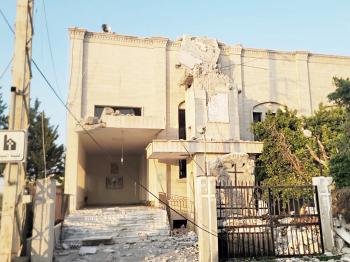
On Sunday 1 March, an Iranian missile penetrated Israel’s air defences and struck a residential area in Beit Shemesh, destroying a synagogue and killing civilians who had sought refuge in a bomb shelter. The strike underlines the dangers faced by Israeli civilians along with those across the Middle East.
The exterior of Christ Church, Jerusalem. Local Christians are among those endangered by the escalating conflict [Bahnfrend / Wikipedia]
Followers of Christ remain a small minority in the land, comprising approximately 1.34% of the population. Three-quarters of Christians are from an Arab background; there are also several thousand Messianic Jews.
Over the past fifteen years, the number of MBBs in the West Bank has grown from an estimated 100 in 2010 to around 500 in 2025. Though small in number, this fivefold increase reflects a quiet yet significant movement of faith beneath a complex religious and political landscape. Yet discipleship remains fragile, requiring wisdom and sustained pastoral care. The Church’s witness is expressed not only through proclamation but through reconciliation, peace-making, trauma care and faithful presence amid uncertainty.
“We are living between promise and pressure, minority status and missional calling,” said a local church leader. “The statistics tell a story of small numbers; the lived reality tells a story of costly faithfulness.”
 How you can pray
- Ask that the tentative hopes of our brothers and sisters in Iran for greater freedom to worship, live out their faith and share the Gospel will be granted.
- Please pray for comfort for those who are displaced and seeking refuge. Ask the Lord to surround them with His presence, provide safety, shelter and sustenance, and reassure them that they are not forgotten or abandoned in their time of need.
- Please remember children traumatised by violence and instability. Pray that God will bring healing to their hearts and minds. Pray for nurturing communities around them, for protection, and for seeds of hope to take root, so that fear and despair do not define their futures.
- Intercede for the Church, that it will continue to open its doors wide to the needy, becoming a place of shelter and hope. Ask that congregations will embody Christ’s love in practical and spiritual ways, offering care, protection and encouragement to those who are hurting and vulnerable.
- Praise the Lord that no matter the events of this world, His Word “is eternal; it stands firm in the heavens” (Psalm 119:89).