In the vast country of Iran, heartland of Shia Islam, the Church of Christ is growing despite intense persecution. In this article we examine the challenges that Iranian Christians face as they seek to live for Christ in one of the countries most resistant to the Gospel on earth.
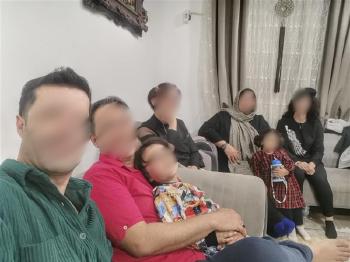
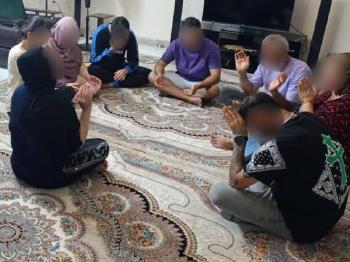
Prayer over the distribution of the Scriptures in the Farsi language [Image credit: Iranian Bible Society in Diaspora]
Have Christians always between persecuted in Iran?
Hostility to Christianity goes a long way back in the land formerly known as Persia. A fear of Christianity dates back to rivalry between the Roman and Persian empires. In 313 A.D., when Constantine I declared Christianity to be a tolerated religion in the Roman Empire, the Sassanid rulers of Persia countered with a policy of persecution against Christians. Most notably, King Shapur II imposed a double-tax on Christians in the 340s to finance his war against the Romans. The Sassanids saw the Christians as a subversive and potentially disloyal minority.
The Islamic Republic of Iran was established by the 1979 revolution and is ruled as a theocracy by an Islamic cleric. Ayatollah Ali Khamenei has been Supreme Ruler since 1989.
Prior to the Islamic Revolution, missionary efforts by Christians led to few converts. In the immediate post-revolutionary period Christians were tolerated. Most believers were Armenians and some Assyrians. These historic Christian communities were left untroubled, unlike evangelical churches, perceived to be supported by the West and including Farsi (Persian)-speaking converts from Islam.
Persecution intensified, however, in the 1990s with a crackdown on church leaders, limits placed on Christian activities and on the opening of churches. The Iranian Bible Society was banned and dissolved in 1990. Importing and distributing Farsi Bibles was forbidden. Church leaders, and other key figures who had converted from Islam, were assassinated or arrested during this period.
Are there churches in Iran?
While historic Armenian and Assyrian churches are permitted to operate, “house churches” made up of Farsi-speaking converts, deemed to be apostates and a threat to the nation’s security, are illegal.
When 12 Christians from Nowshahr, northern Iran, appeared in court in November 2024 to answer charges of “propagating a religion contrary to Islam” and “collaborating with foreign governments”, the prosecutor described the converts as “Shia Muslims” who had “identified themselves as Christians”. The implication seems to be that Shia Muslims can never legally leave the religion of their birth.
There is an openness to the Gospel amongst the Iranian population, partly because government repression and violence in the name of Islam have caused people to question their inherited beliefs. As a result, there are small networks of underground “house churches” operating throughout the country.
Saint Sarkis Cathedral, Tehran. Armenian churches are permitted to function in Iran but closely monitored [Image credit: Diego Delso/Wikipedia]
Considerable discretion is necessary in planning meetings for such churches, and it is impossible to guarantee protection from informers. House churches have had to vary their venues regularly, but this does not always prevent the authorities locating such gatherings and arresting attendees. In some cases, Christians meet discreetly in twos and threes, going for walks or drives together.
What happens to Christians in Iran?
Even the historic Armenian and Assyrian congregations are monitored and kept under surveillance. The government controls when churches can meet for worship and keeps lists of attendees. Unofficial meetings are closed down.
The usual charges levelled at Christians are offences against national security, spreading “propaganda activities contrary to Islamic law”, and membership of illegal organisations. House churches are routinely defined as illegal groups “with the aim of disrupting the security of the country through educational and propaganda activities contrary to and disturbing to the holy religion of Islam”.
Punishments include long prison terms of several years, often including fines. On release Christians are sometimes forced into internal exile, living hundreds of miles from home for years, and suffer social exclusion, banned from certain professions as well as associating with churches or other Christian organisations. Christians are sometimes forced to undertake re-education classes in Islam to be guided “back on the right path”.
Naser Navard Goltapeh, left, and Pastor Joseph Shahbazian were rearrested despite being “pardoned” [Image credit: Article18]
Those convicted are not immediately incarcerated. They are instructed to await a summons to begin their sentences, forcing them to put their lives on hold for weeks, even months.
Even when sentences are reduced and a “pardon” is granted, grounds have been found to re-arrest Christians within months. In February 2025, Naser Navard Goltapeh and Pastor Joseph Shahbazian, both in their early 60s, were taken from their homes in the Tehran region by intelligence agents and returned to Evin Prison, notorious for its mistreatment of prisoners. Both Christians had been pardoned and released from prison where they had served terms for their roles in running house churches.
Alleged crimes while abroad can lead to imprisonment. Laleh Saati, an Iranian Christian convert from Islam, was baptised while living for some time in Malaysia. She returned to Iran to care for elderly parents. Intelligence agents raided her home, discovered mobile phone footage of her Christian activities in Malaysia, including her baptism, and arrested her. She was released after completing 15 months in prison and is now serving an additional two-year ban on travelling abroad.
Is persecution getting worse?
There is no sign of any relenting in Christian persecution. Recent mass arrests demonstrate the readiness of the authorities to target Christians at any sign of a threat to national security.
In August 2025 the Iranian authorities announced the arrest of more than 50 Christians on supposed national security grounds in the weeks since the end of active hostilities with Israel.
The following month an appeal court in Tehran rejected the appeals of five Christian converts from Islam and confirmed their prison sentences for “propaganda” charges concerning church activities. The five converts were arrested at their homes and workplaces in the cities of Varamin and Pishva, some 50 miles south of Tehran, in June 2024.
Iranian Christian converts (left to right) Mehran Shamloui, Abbas Soori and Narges Nasri. All three fled the country before their summons to begin their sentences but Mehran was deported from Turkey [Image credit: Article 18]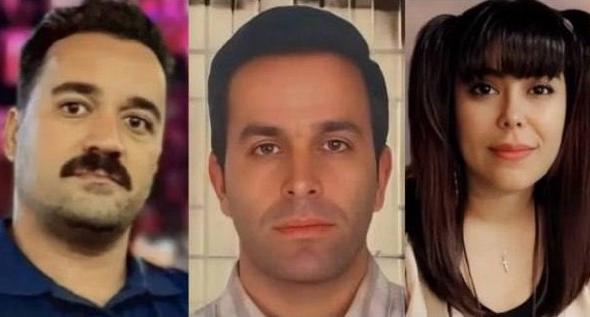
In April 2025, three converts had their appeals against their sentences for involvement in worship meetings turned down and were summoned to start their sentences. All three had fled the country in the meantime. One of them, Mehran Shamloui, was apprehended and deported from Turkey to begin his sentence in Iran. At the time of writing the other two converts are thought to be still abroad.
Community persecution of converts is less widely reported but happens frequently. Muslims who kill a family member for converting to Christianity may be exonerated as the actions may be considered justified.
Is Christianity growing in Iran?
There are estimated to be between 500,000 and 800,000 Christians in Iran. Some estimates put the figure above one million. With the secrecy required of house churches it is hard to be definite, but Barnabas Aid contacts confirm that there is Christian witness in many parts of this vast country.
It is striking that even when Christians are imprisoned, the Gospel advances. Our contact reports, “There are Christians in prisons in every city. They won’t stop talking about Christ. The love of Christ flows from them.”
Let us pray that the Good News of our Lord Jesus Christ will reach every corner of Iran by whatever means He chooses.
 How you can pray
Praise the Lord that many are turning to the Lord Jesus in Iran. Pray that these new converts will be nurtured and built up in the faith. Pray for Christian leaders to be protected from harm to fulfil their ministry. Ask that God will use even the darkest situations of imprisonment to draw many to the one and only Saviour (Acts 4:12).